Winch gearboxes: worm vs planetary explained
In short
- Between the motor and the drum a winch has a gearbox that turns fast motor rotation into slow, powerful drum rotation, and the two common types, worm and planetary, behave differently.
- A worm gearbox can be self-locking, holding the load by itself, but it is less efficient and makes more heat; a planetary gearbox is highly efficient and very compact but is not self-locking and relies on a brake.
- Worm suits simple, self-holding, lower duty; planetary suits high power, efficient, hard working duty, which is why most heavy winches are planetary.
A winch motor spins fast and with modest torque, but a winch needs the opposite at the drum: slow rotation with great force. The part that makes this conversion is the gearbox, and it is as important to how a winch behaves as the motor itself. Two gear types dominate winch design, the worm gear and the planetary gear, and they are not interchangeable: they differ in efficiency, in whether they hold the load on their own, in how they handle heat and in how they are built. Understanding the two is part of understanding why one winch holds its load without a brake while another runs cooler and harder, and which suits a given duty.
What a winch gearbox does
The gearbox sits between the motor and the drum and provides the reduction that turns fast, light motor rotation into the slow, powerful turning a drum needs to pull a load. The amount of reduction sets the trade between speed and pull, and the type of gearing sets the character of that reduction: how efficiently the power passes through, how much heat is made, how compact the result is and whether the gearing holds the load when the motor stops. So the gearbox is not just a speed reducer but a defining part of the winch, and the choice between worm and planetary shapes much of how the finished machine works in the hand.
The worm gear and self-locking
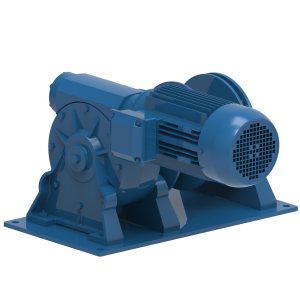
A worm gear uses a screw like worm meshing with a wheel, and its defining feature is that it can be self-locking: the worm can drive the wheel, but the wheel often cannot drive the worm back, so the gearbox holds the load by itself when the motor stops, without relying on a brake to do it. It also gives a high reduction in a single, simple stage and is compact and robust. This self-locking, self-holding character makes worm gearing attractive for simple winches where holding the load securely without depending on a separate brake is valued, and it has long been a common choice for that reason.
| Feature | Worm gear | Planetary gear |
| Self-locking | Often yes, holds load | No, needs a brake |
| Efficiency | Lower, makes heat | High, runs cool |
| Reduction per stage | High in one stage | High, compact, stacked |
| Size for torque | Compact, simple | Very compact, strong |
| Best for | Simple, self-holding duty | High power, efficient duty |
The price of the worm: efficiency and heat
The self-locking that makes a worm gear attractive comes from friction, and friction has a cost. A worm gearbox is less efficient than a planetary one, turning more of the power passing through it into heat rather than useful work, so a worm driven winch runs warmer and makes less of the motor's power available at the drum. For light or intermittent duty this matters little, but for heavy, continuous work the lost efficiency and the heat become real limitations. So the worm gear trades efficiency for the convenience of self-locking, a trade that suits some duties well and others poorly, which is the heart of choosing between the two.
The planetary gear: efficient and compact
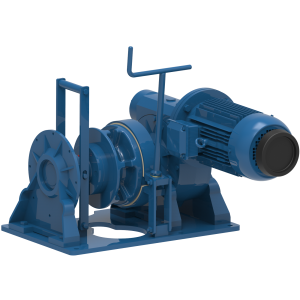
A planetary gearbox uses a central sun gear, planet gears around it and an outer ring, sharing the load across several gear meshes at once. This sharing gives it two great strengths: it is highly efficient, passing most of the power through with little loss and little heat, and it is very compact and strong for the torque it handles, because several gears carry the load together. These qualities make planetary gearing the natural choice for high power, hard working winches, where efficiency, low heat and a compact, powerful package all matter. It is why the great majority of heavy industrial winches use planetary gearing rather than worm.
Planetary needs a brake
The planetary gearbox's efficiency has a flip side: because it passes power so freely, it is not self-locking, and a load would drive it backward if nothing held it. So a planetary winch relies on a brake to hold the load when the motor stops, the subject of our note on brake holding force. This is not a weakness, because a properly specified brake holds the load securely and is standard on these winches, but it does mean the planetary winch depends on its brake where a worm winch can hold by the gearing alone. The brake is therefore an integral, designed part of a planetary winch rather than an afterthought.
Heat, duty and the gearbox
The gearbox's efficiency feeds directly into the winch's heat and duty. A worm gearbox's lower efficiency adds heat that, together with the motor's, limits how long the winch can work, a thermal story that ties into our note on motor cooling and heat. A planetary gearbox, running cooler, leaves more of the thermal headroom for the motor and supports a harder duty. So for steady, heavy work the efficient planetary gearbox helps the winch sustain its duty, while for occasional, light work the worm gearbox's heat matters little and its self-locking is the more useful quality. The duty and the gearbox are read together.
Choosing between them
The choice comes down to the duty and what is valued. For simple, lighter, intermittent winches where holding the load securely by the gearing itself is wanted and efficiency matters less, a worm gearbox is a sound, self-contained choice. For high power, hard working, efficient winches where low heat and a compact, strong package matter and a brake is standard anyway, a planetary gearbox is the natural answer, which is why most serious winches use it. Neither is better in the abstract; the right gearbox is the one whose strengths match the duty, and we are glad to advise which, as our overview of the winch families sets in context. It is also worth remembering that the gearbox is chosen alongside the motor, the brake and the drum, not on its own, because all four together decide how the finished winch pulls, holds and lasts.
Specifying the right gearbox with us
We build winches with the gearing matched to the duty, self-locking worm where that suits, efficient planetary where the work is heavy. See the range in our winch catalogue, and read how the brake and the duty cycle bear on the choice. Tell us the load, the duty and whether self-holding without a brake is wanted, and we will specify a winch whose gearbox suits the work rather than fit one type to every job.
Frequently asked questions
What is the difference between worm and planetary winch gears?
A worm gear can be self-locking, holding the load by itself when the motor stops, but is less efficient and makes more heat. A planetary gear is highly efficient and compact but not self-locking, so it relies on a brake. Worm suits simple self-holding duty; planetary suits high power, efficient work.
Why is a worm gearbox self-locking?
Because the screw like worm can drive the wheel, but the wheel usually cannot drive the worm back, so the gearing holds the load when the motor stops without relying on a brake. This self-holding comes from friction, which is also why a worm gearbox is less efficient and runs warmer.
Why do planetary winches need a brake?
Because a planetary gearbox passes power so freely that it is not self-locking, so a load would drive it backward if nothing held it. A brake holds the load when the motor stops, and it is a standard, integral part of these winches rather than an afterthought, holding the load securely.
Which gearbox is better for heavy duty?
Planetary, usually. It is highly efficient, runs cooler and is compact and strong for the torque, which suits high power, continuous work and leaves more thermal headroom for the motor. Worm gearing suits lighter, intermittent duty where self-locking is valued and the lower efficiency matters less.